
There was a time when the word “protein” mostly belonged to gym conversations. Today, it has found its way into breakfast tables, grocery lists and conversations about everyday nutrition. The good news is that eating enough protein does not mean living on expensive protein shakes, protein bars or complicated recipes.
So, what are some protein-rich dairy foods you can include every day?
And how much protein do you actually need?
The answer is simpler than you might think.
Why Does Your Body Need Protein Every Day?
Protein is one of the three important macronutrients. It provides amino acids that the body needs to build and maintain cells, tissues and muscles, while also supporting several important processes in the body.
Getting enough protein becomes particularly important when we think about maintaining muscle mass and strength through different stages of life. The ICMR-NIN Dietary Guidelines for Indians 2024 also emphasise that a good diet, along with regular physical activity, is important for maintaining muscle mass and muscle function.
But this does not mean every meal needs to become a “high-protein meal”. What matters is getting enough protein from a varied diet over the course of the day.
How Much Protein Should Indians Eat Every Day?
There is no one-size-fits-all number. Your protein requirement can vary depending on factors such as body weight, age, life stage and individual nutritional needs.
For healthy Indian adults, the ICMR-NIN recommended dietary allowance (RDA) is 0.83 g of protein per kg of body weight per day. So, for a person weighing 65 kg, that works out to about 54 g of protein a day.
That number can sound like a lot when you see it written down. In practice, protein is spread across everything you eat.
Your morning milk, dal at lunch, a bowl of dahi, paneer at dinner, nuts, seeds, beans and other foods can all contribute to your daily protein intake.
The ICMR-NIN guidelines also highlight the value of combining cereals and pulses to improve the quality of protein in a vegetarian diet. So, the familiar dal-chawal or roti-dal combination has more going for it than just being comfort food.
Can Paneer Be an Easy Everyday Source of Protein?
If there is one dairy food that makes adding protein to an Indian meal particularly easy, it is paneer.
Paneer does not need a special occasion. It can become paneer bhurji with roti, cubes in a salad, a sandwich filling, palak paneer at lunch or grilled paneer with vegetables at dinner. The possibilities are almost endless.
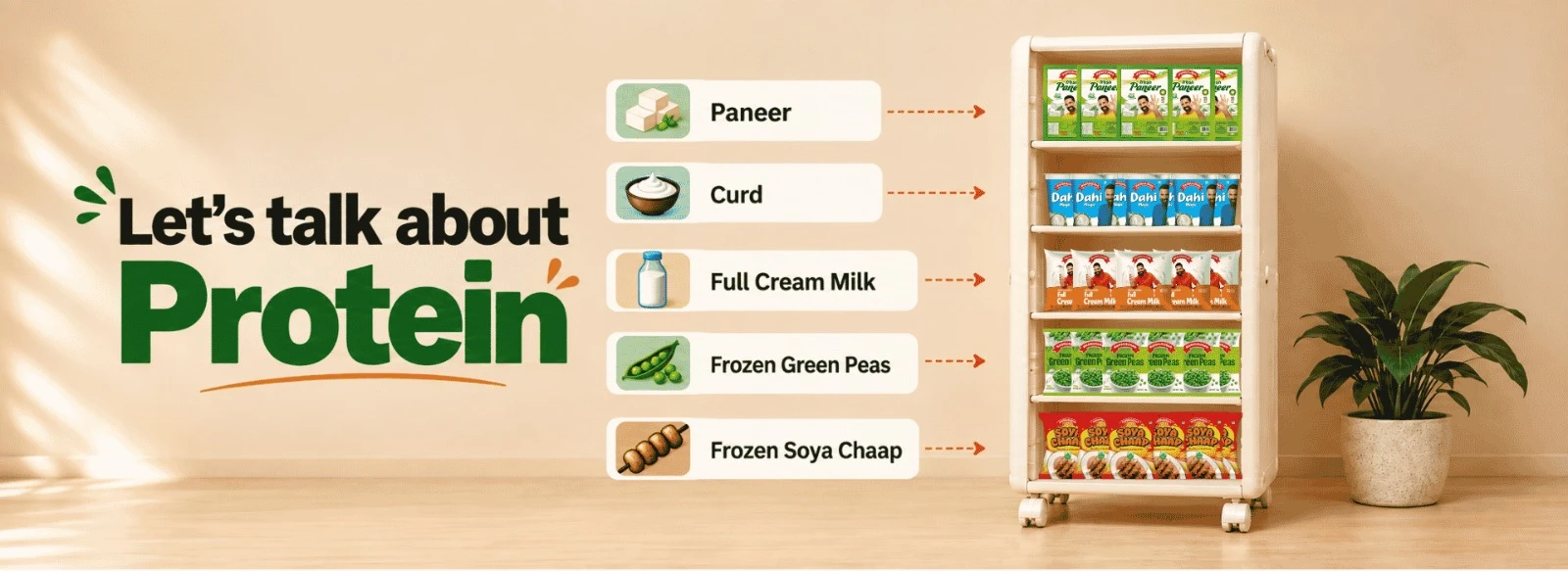
Madhusudan Fresh Paneer provides approximately 18.5 g of protein per 100 g, along with calcium. That makes Madhusudan Fresh Paneer a practical option when you want to include a more concentrated dairy source of protein in a meal.
And the best part? You do not need to reinvent your cooking. Your usual paneer recipes already know what to do.
Can Milk Contribute to Your Daily Protein Intake?
Absolutely. Milk may be one of the least dramatic foods on your grocery list, but its regular presence is exactly what makes it useful.
Madhusudan Full Cream Milk provides approximately 3.3 g of protein per 100 ml, along with calcium. It can be enjoyed as a drink or used in everyday preparations such as tea, coffee and homemade dishes.
For those who prefer a lighter option, Madhusudan Double Toned Milk also provides approximately 3.3 g of protein per 100 ml.
And when convenience matters, Madhusudan UHT Milk provides approximately 3.3 g of protein per 100 ml and does not require refrigeration before opening.
Of course, a glass of milk will not meet your entire protein requirement on its own. Think of it as one small but consistent contribution to the day’s total.
Is Dahi an Underrated Protein-Rich Dairy Food?
Dahi already has a permanent place at the Indian dining table. It accompanies parathas, rice and pulao, turns into raita and kadhi, or is simply eaten by the bowlful. The best thing about Madhusudan Dahi is that it also contributes protein.
Madhusudan Dahi contains approximately 4.1 g of protein per 100 g. It is made from pasteurised toned milk with live cultures and contains no added sugar.
That makes a bowl of Madhusudan Dahi an easy addition to breakfast, lunch or a snack.
And perhaps that is what makes everyday nutrition easier; you don't always need to add something new. Sometimes, you just need to make better use of the foods already sitting on the table, and sometimes, it could be as simple as a bowl of Dahi.
Can Chaach Contribute to Your Daily Protein Intake?
Yes, although chaach is better thought of as a supporting source of protein rather than a high-protein food.
Madhusudan Plain Chaach provides approximately 1.5 g of protein per 100 ml. Made from cultured curd, it is a light, refreshing drink that can be enjoyed with or after meals.
So, while chaach should not be your main strategy for meeting your daily protein requirement, it can still contribute to your overall intake.
And it has another advantage: it fits naturally into the way many Indians already eat.
Are There Other Protein-Rich Foods You Can Add to Everyday Meals?
Protein does not have to come only from dairy. A balanced Indian diet can include a variety of plant-based protein sources too.
Madhusudan Frozen Green Peas are one convenient option. Green peas can easily find their way into pulao, poha, curries, sandwiches and mixed-vegetable preparations, adding variety as well as protein to familiar meals.
Madhusudan’s frozen range also includes Madhusudan Frozen Soya Chaap , which can be used when you want a more substantial vegetarian option without starting every meal completely from scratch.
The idea is not to turn these foods into “protein products”. It is simply that convenient, familiar food items can have a place in a varied, protein-conscious diet.
How Can You Add More Protein to Everyday Indian Meals?
The easiest approach is to stop thinking of protein as something separate from your regular food.
Start with breakfast. Milk alongside your breakfast or dahi with a meal can make a small contribution. At lunch, combine familiar foods such as dal (pulses), rice or roti, vegetables and dahi. For dinner, paneer can become the centre of a dish, while peas, pulses, beans, nuts and seeds can add further variety.
You could even think of the day as a collection of small contributions rather than one big protein target. Combining your regular food items like dahi, milk, paneer, dal, and other everyday foods can be a much more practical approach to daily protein intake than trying to fit one large protein-heavy meal into your routine.
The idea is not to get all your protein from one food. It is to let several familiar foods contribute throughout the day.
By following this, you can, most importantly, consume the food you actually enjoy eating.
Can Protein-Rich Eating Really Be This Simple?
It can!
You do not need to overhaul your everyday meals to make room for more protein. A glass of milk at breakfast, a bowl of dahi with lunch, some paneer at dinner, dal with rice or roti, or peas added to a familiar meal can all contribute to your daily protein intake.
These may not look like the dramatic “protein-packed” meals that dominate social media, but they all have a place in a balanced diet.
And that may be the most useful way to think about protein-rich dairy foods: not as a new category of food you need to discover, but as familiar everyday foods that can contribute to your nutritional needs.
Conclusion
When it comes to protein, variety and consistency matter more than perfection. With foods you already know and enjoy, getting enough protein can become less of a daily calculation and more of a natural part of eating well.
Because eating better does not always require a new diet.
Sometimes, it simply means looking at the food already on your plate a little differently.